The 5 Hiring Mistakes Holding Your Business Back
Hiring is one of the most important (and most expensive!) decisions a small or mid-sized business (SMBs) will make. The right hire fuels productivity, strengthens culture, and supports long-term growth. The wrong hire can cost thousands in lost time, training, turnover, and morale.
For growing organizations, hiring often happens quickly and under pressure, which is precisely when avoidable mistakes tend to occur. At Flex HR, we partner with business owners and leadership teams in growth mode every day, and we consistently see the same patterns emerge.
What Hiring Mistakes Are Holding Your Organization Back?
We outline five major mistakes that could cause your business big problems. The good news? These mistakes are preventable with structure and strategy – and the right support.
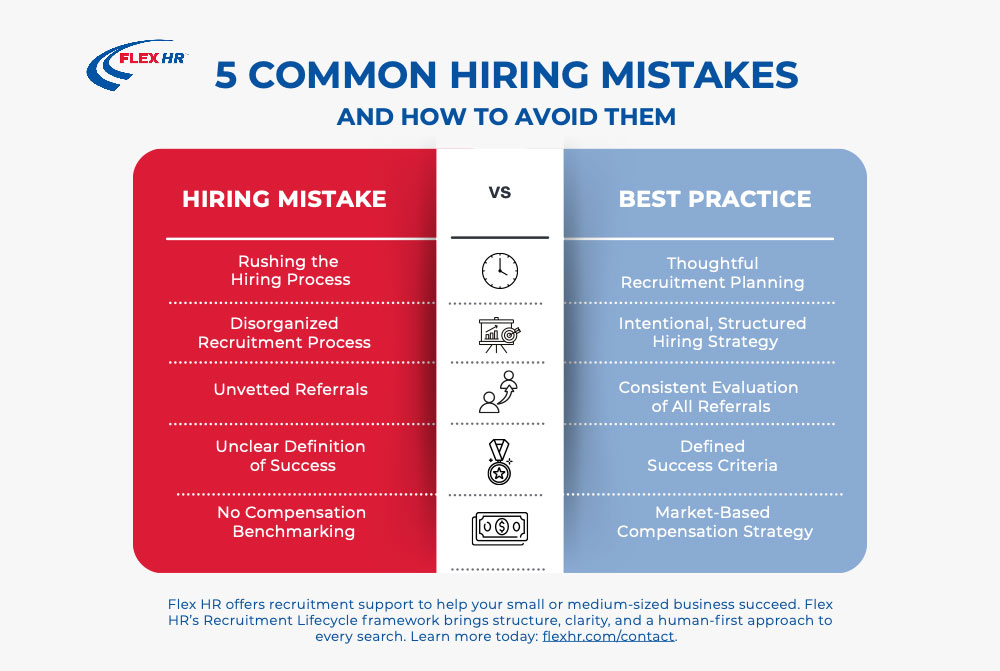
1. Rushing the Hiring Process
One of the most common missteps we see is rushing the hiring process. When a role is vacant, the pressure is immediate. Work piles up, deadlines tighten, and existing team members stretch themselves thin trying to compensate.
Because of the strain, it’s completely understandable that leaders want relief quickly. However, rushing through interviews without fully evaluating a candidate’s skills, competencies, and long-term fit often creates larger problems down the road.
A strong resume and a pleasant interview do not always translate into performance success. When hiring decisions are made based on urgency rather than intentional assessment, organizations risk adding someone who cannot meet expectations, resulting in turnover and restarting the entire process.
Taking the time to thoroughly assess both technical abilities and behavioral competencies protects your investment and sets the new hire up for success.

2. Not Having a Structured Hiring Process in Place
To get repeatable results without dragging the process on, hiring needs a clear, consistent structure. Candidates can quickly sense when an organization lacks professionalism in its hiring approach. Interviews are rescheduled multiple times. Communication is inconsistent. Interviewers appear unprepared or distracted. There is no clear timeline, and feedback takes weeks. It’s a poor candidate experience, and this matters.
In today’s competitive talent market, candidates evaluate your organization just as carefully as you evaluate them. A disorganized hiring experience sends the wrong message about your leadership, culture, and operational maturity.
Beyond perception, a lack of process also creates internal risk. Without structured interviews, standardized evaluation criteria, and defined steps, decisions become subjective and inconsistent. Hiring becomes based on “gut feel” rather than measurable alignment. A structured hiring process communicates fairness, clarity, and respect – all of which strengthen your employer brand.
3. Hiring Employee Referrals Without Proper Evaluation
Employee referrals can be valuable sources of talent, but hiring referrals without a formal evaluation process is a risk. Trusted networks often produce strong candidates; however, familiarity should never replace qualification.
Many organizations assume that because a candidate comes recommended by a neighbor, former colleague, or family friend, they are automatically a strong fit. Skipping structured interviews, skills assessments, and cultural evaluation increases the risk of misalignment. If performance falls short, the situation becomes difficult and potentially damaging to workplace relationships.
Every candidate – including referrals – should be evaluated against the same criteria. Consistency protects your culture, supports fair hiring practices, and reinforces organizational standards.
4. Failing to Align on What Successful Hiring Looks Like
Failing to collaborate internally before beginning the recruitment process can greatly hinder success. Many organizations post a job description without aligning leadership and stakeholders first. When interviews begin, departments are not on the same page about expectations.
One interviewer prioritizes technical expertise. Another values personality and culture alignment. A third emphasizes industry experience. Without shared clarity on the role’s purpose, key competencies, and measurable success indicators, feedback becomes fragmented and inconsistent.
Effective hiring begins before resumes are reviewed. It starts with defining what success looks like at 30, 90, and 180 days. When teams collaborate and align early, hiring decisions become clearer, faster, and more strategic.
5. Skipping Compensation Benchmarking and Market Data Analysis
Failing to conduct compensation benchmarking is one of the most financially impactful hiring mistakes SMBs make. Leaders often rely on outdated salary history, internal budget assumptions, or what they believe the market “should” pay. However, compensation markets shift rapidly.
Today’s candidates are informed and transparent about salary expectations. Without current market data, organizations risk underpaying and losing top talent to competitors or overpaying and creating internal equity challenges. Both scenarios create long-term retention and morale issues.
Running compensation and market data reports ensures your offers are competitive, equitable, and aligned with your overall talent strategy. Compensation decisions should be data-driven – not guesswork.
How Flex HR’s Recruitment Lifecycle Framework Builds Thriving Teams
At Flex HR, we believe hiring is too important to be reactive. Our Recruitment Lifecycle framework brings the structure, clarity, and human-first approach your search deserves. Rather than jumping straight into posting a job, we begin with intention.
In Phase One, we focus on learning about your business model, leadership dynamics, core values, and long-term hiring goals. Before a resume is ever reviewed, we align on what success truly looks like.
From there, we move into defining the role with precision. Clear roles lead to better hires. We partner with your leadership team to outline responsibilities, reporting structure, required and preferred competencies, compensation range, and measurable success indicators, including what the first 90 days should accomplish. This proactive definition prevents misalignment, inconsistent feedback, and vague expectations that often derail hiring efforts.
Next, we design a thoughtful, structured interview process. Every candidate is evaluated against consistent competencies and performance expectations through carefully developed interview guides and defined decision checkpoints.
We help identify and prepare your interview team, establish communication loops, and ensure candidates feel respected and engaged throughout the process. This structure protects your employer brand and eliminates the perception of disorganization or rushed decision-making.
For organizations without internal recruiting resources, we seamlessly execute the hiring plan on your behalf: sourcing, screening, coordinating interviews, and communicating progress to stakeholders. When it’s time to make the hire, we guide you through a strategic offer process grounded in compensation benchmarking and market data. From negotiations to reference checks to developing a 30/60/90-day success plan, we ensure the hire is not only accepted but positioned for long-term success.
Our Recruitment Lifecycle is designed to prevent the very mistakes that cost small businesses time, money, and momentum. By combining strategic alignment, structured evaluation, market insight, and thoughtful execution, we help you build thriving teams that support sustainable growth. When hiring is done with intention, it becomes one of your strongest competitive advantages.
Don’t leave your hiring decisions to chance. Partner with Flex HR and build a process that delivers the right talent, every time. Reach out to us today!
Interested in more way to engage with Flex HR’s Recruitment team? Register for our upcoming webinar on March 11
Attend the Build the Team, Not Just the Role Webinar